Showing posts with label process. Show all posts

Thursday, November 17, 2016

Why I Haven't Been Writing

.:
 I’m not the kind of person who gets lightbulb moments. Especially not when it comes to writing. Maybe I was on the brink of a revelation at some point—the secret to having faith in my own ideas, or writing the perfect opening paragraph, or finishing every draft I start (and better yet—turning those first drafts into actual readable stories). If I ever was, though, I can say with absolute certainty that I was too stressed/distracted/lazy to notice it. But that’s okay. Because I’m finally beginning to understand why my writing process sucks so much.

 Sort of. Maybe. And I still can’t type they next sentence out without agonizing over how flaky it sounds, but here goes: My writing process has become all about fear. And, okay, fear is something I’ve come to expect, but lately things have been getting out of control.

When I have no ideas, I’m worrying about finding ideas. Once I get ideas, I’m worrying about whether they’re good ideas. While I'm trying to turn those ideas into stories, I worry about the sound of the sentences and the structure of the opening paragraph (and the paragraph after that and the paragraph after that). I worry about word counts. I worry about editing. I worry about every single time I’ve failed before and all the ways I could fail this time. I worry about what I should be writing. I worry about what I shouldn’t be writing. And at some point I finally realized that all I was really worrying about was the finished product. I’d stopped caring about the process of actually writing.

 The thing is, whether the finished story is any good or not won’t matter if I was absolutely miserable the entire time I was creating it. It’s not that I shouldn’t work to make my stories as well-written as I can, but whether other people see them as quality literature or not isn’t up to me. And instead of beating myself up for all the stories that never quite took off, I should be glad that I somehow worked up the courage to try writing them at all.

Anyway.

 I’m not sure how I’ll fix this. For now I’m trying to ease back into writing regularly (I haven’t had much time for that this semester) and trying to enjoy just putting words on the page. Thinking in terms of process instead of product pretty much goes against my entire nature, and I don’t think I’ll ever master it. At least I’m finally trying. I want to quit seeing writing as something I have to do and start seeing it as something I have the privilege of doing. I want to write joyfully. Otherwise, what’s the point?

 (Also, I just looked back over some old posts and saw that I've complained about my fear of failure in at least every other post on writing I've ever published. I didn't plan on this becoming a running theme on my blog, but here we are.)

Picture via Pinterest. 

Friday, July 1, 2016

Problems With Plotting

Delta Breezes...:

So, I’ve been plodding semi-steadily through the fourth draft of my mermaids & Neverland short story, and trying to get some other projects off the ground. It’s been slow going, guys. Partly because I’m feeling drained and a little discouraged, partly because summer isn’t usually a productive time for me, and partly because I can’t plot to save my life.


My idea-getting always begins with relationships. Not even specific characters, but a specific type of dynamic I’d like to explore. If I’m lucky, there’s enough to this relationship to suggest the kind of characters who’d be involved in it. For my Twelve Dancing Princesses retelling, I knew I wanted to explore the relationship between the sisters, plus the eldest princess’ interactions with the soldier. I was also lucky enough to have the basic plot already laid out for me. Most times, I don’t, and this is where things get tough.


I can’t plot, at least not as well as I’d like to, and never easily. For some reason, getting characters from point A to point B is a struggle for me. They’re so many times when I’ve written a decent opening scene before realizing that I have no clue where the story should go next. I’ve tried outlining, flash cards, and freewriting, but so far I haven’t found the magic bullet that will turn me into a plotting whiz. Mostly I just have to muddle through and hope I make it to the end.


Maybe I’m more of a character writer, but 100+ pages of nothing but pointless conversations and introspection do not a good story make. I love tightly plotted books, and I’d love to learn how to improve my plotting “skills”. So my question today is, how do you guys plot? Whether you outline or don’t, whether your stories are plot- or character-focused, I’d love to hear how you navigate from point A to point B.

Picture Credit: X

Sunday, June 5, 2016

Zombies Bore Me

.:

Near the beginning of Dark Places Libby Day, one of the most likeably unlikeable characters ever, thinks, “Coffee goes great with sudden death,”.  For me it’s “Tea goes great with writing,” because sometimes writing does feel like sudden death. Like when the story you’ve worked on for days suddenly loses all its zest for life and goes belly-up before your very eyes. It’s kind of traumatic.

Well, really, it’s nowhere near as traumatic as sudden death. But exaggerated analogies aside, this just happened to a short story I was working on. One day I was rolling right along, getting out a not-great-but-fairly-passable first draft, and the next I sat down to write and realized that the spark was gone. The story was dead as a doornail, and so was my motivation to finish it.

Since I’m also working on a book-length project, plus another short story (plus, I suddenly have more ideas than I know what to do with), I’m not as upset about this as I usually am. I’m just curious about why this story failed. How come it fell apart so quickly? After thinking about it, I realized it was because this short story was about zombies. And zombies bore me.

I love reading other books about zombies. I LOVE The Walking Dead (both the show and the comics I’ve read). Zombies can be really interesting when other people write about them. But when it comes down to it, they’re just shuffling corpses. On their own, they’re neither especially scary or especially interesting. To make a zombie story work, you need a bit of a unique angle on the mythology, and a compelling story with interesting characters. I had neither.

I was writing your garden-variety apocalypse story, and my zombies were boring. It was nothing I hadn’t read or seen before--slow-moving, unending appetite for human flesh, yada, yada, yada. Maybe it would have worked if my character were better, but on their own they didn't interest me, either. In one way, it’s sort of sad, but in another I feel so liberated. I’ve been trying to write a zombie story for AGES, and now I’ve finally realized that I don’t have to.

So there’s really not much point to this post, other than me realizing they’re certain things I don’t (at least at the moment) have enough of a unique spin on to write about. Also, I don’t have to have a unique spin on everything. Sometimes it’s just enough to enjoy other people’s work.

Is there a certain mythological creature/type of story that you’ve tried to write but just can’t? (Also, if you’re looking for some good zombie books, The Reapers Are the Angels by Alden Bell and The Girl With All the Gifts by M.R. Carey are both fantastic.)

Picture credit: X

Saturday, May 14, 2016

Writing Updates + Lemonade Recipe

~:

So far, May has been pretty uneventful but productive, which makes me happy. I’m deep in the midst of first-drafting--in some ways my favorite part of writing and in other ways my least favorite, since every story is so MESSY and convoluted. But things are moving along steadily(ish) for the first time in ages, so I can’t complain too much.


At the moment I’m working on two stories, one short and one (hopefully) book-length. Book-Length Story is about ghosts, psychopomps, and the West Virginia Panhandle, and is so far a complete mess but one I’m really enjoying working on. There’s something a bit magical about writing two characters who have chemistry--not romantic chemistry, but the ability to hold interesting conversations and work off each other. I’m always a little surprised when that happens; it’s not something you can force.


Short Story is about mermaids, Peter Pan, and Neverland. Mostly mermaids. My twin sister and I used to get into arguments about the best spots in Neverland. I always wanted to live in the Mermaids’ Lagoon, and she always wanted to live with the Indians. The seed of this story has been in my head for a very long time, and I was actually trying to write something else when it more or less forced its way onto the page. Like Book-Length Story, it needs work, but for now I’m having a ton of fun watching the first draft come together.

Okay, on to the recipe!


This week, one of my other sisters (I have three) taught me how to make lemonade out of fresh-squeezed lemons. This recipe only makes one serving, but it’s easy to double and delicious. Plus there’s nothing more summery than lemonade.


Ingredients:
2 tbsp sugar
2 tbsp water
1 lemon


Boil the water and sugar to make a simple syrup. Squeeze the juice of one lemon into a tall glass already filled with ice. Pour in the simple syrup, fill the glass with cold water, and mix well.


And those are the most interesting things I’ve done this month. How have your summers been going?

Watercolor garland from Angie Makes.  
Picture credit: X 

Sunday, May 8, 2016

On Writing Slowly

 :

To begin: I absolutely am not trying to throw shade at anyone who writes fast. Everyone’s process is different, and I wish I could write a book in a month or turn out perfectly polished short stories regularly. I wish I could, but the more I write the more I realize that I never will be able to, and that’s okay.


I’ve never been an especially fast writer. When I first started writing “seriously” (I was around twelve, and everything I wrote was a poorly-disguised rip-off of something else.) I set myself a goal--something like 2-3 pages a day. That’s more or less the limit I stick to now, though some days I can’t even make that. (My stories are still rip-offs, by the way. Just better-disguised ones. :))


Keeping a strict schedule is also a sticking point for me. I used to write every day, but not anymore. Most days, yes. Every day, no. Sometimes it just comes down to laziness, but other times I do need space to mull over the plot a little. I’m a pantser, and also super disorganized, so if I don’t keep reminding myself to hit the main points, nothing will happen plot-wise and I’ll be left wondering why I ever decided to write this stupid story in the first place.


Basically, I’m not one of those people who can write a novel in a month, or even two months, without it being a hopeless mess. Which is the point, but half the fun of writing is, at least for me, taking the time to get to know the characters, sink into the setting, and enjoy the story. I can’t do that when I’m worrying about word or page counts.

I used to feel guilty about writing slowly, or about the days where I wasn’t able to write at all. To be honest, I still do. Every time NaNoWriMo rolls around I wonder if maybe this is the year I’ll give it a try. And maybe one year I will.  But for now, I’m trying to be happy with the process I have.

Everyone has a different process. Everyone has their own way of doing things, and no one way is objectively better than the others. If you write fast and love it, keep writing fast. If writing slowly works for you, stick with that. Don’t be afraid to experiment, but know your strengths. And enjoy what you have now. At the end of the day, that’s all that really matters.


Do you write quickly or slowly? What does your process look like?

Picture Credit: X

Tuesday, April 5, 2016

On Being Productive


 :   
Before we get started, let me just say this: “productivity” isn’t my natural state of being. My natural state of being would probably involve me in my bedroom at 10:00 am with the shades pulled down, binge watching Netflix and stuffing my face. Or rereading my favorite books and moping because I’ll never be as good a writer as S.E. Hinton (DUH). Loving other people’s stories is a whole lot easier than writing your own.


Because, honestly, writing can get tedious. No matter how much I love doing it, it’s hard to stare at the computer for an hour and come away with (if I’m lucky) one or two pages. Then get up at next day and do it all over again. Rinse, wash, repeat.  I’m not a finish-a-book-in-a-month type of writer, and I don’t think I ever will be.


My solution for that is working on more than one project. Focusing on just one story at a time has never ended well for me; I get perfectionistic and claustrophobic and just want to backspace all the way to page one. Spreading myself around stops me from obsessing too long over any one story.


I also play certain songs over and over again until they fade into a nice background track--right now I’m listening to “Roses” by The Chainsmokers. “Stuck in a Moment You Can’t Get Out Of” by U2 and (weirdly) “Life on Mars” by David Bowie are two of my favorite motivational songs. Plus there’s always “Try” by P!nk. I’m a visual thinker, which means half the time I’ll be tearing my hair out because I know exactly how everyone in a scene should look and move, but it’s not playing out right on paper. Having a soundtracks helps.


 So does journaling. Since college my entries have been few and far between, but I do try to keep track of what I’m writing (or why I’m not writing). Reading books about writers inspires me--I just finished The Art of Neil Gaiman, which is a beautiful book (fair warning: it includes a bunch of examples of his earlier work, some of which is pretty disturbing). I can’t see an empty notebook without wanting to fill it up with something.


And when all of that fails, I write. Right now I’m working on three different projects--a short story I need to polish, another one I’m drafting, and the very start of what I hope will be a much longer project. They all have bits of things that I love in them--ghosts and magic and horror and family--and so far they’ve all been flowing, which is wonderful. I’m not bouncing-of-the-walls giddy with joy, but I am satisfied, and that’s the most wonderful feeling.


So I guess what I’m trying to say is that the right ideas will stick with you, and they’re worth slogging through on the hard days. You can be unsentimental with them and just write, because they’re the ones that you need to finish, no matter what.

How do you guys stay productive?

Picture credit: X

Monday, February 15, 2016

Finding Inspiration in Winter

.:
via


  Finding inspiration to write (or just to be happy and get through the day) can be tough for me no matter the season. But these past couple weeks, thanks to slush, gloomy days, and piles of college homework, it’s been about as easy as sucking jell-o through a straw. Spring feels incredibly faraway, so I decided I’d better find some ways to cheer myself up in the meantime.

1. Brew some tea
They’re a couple of things you can do to enjoy a gloomy day, and slurping down a mug of hot tea always works for me. Drink it while journaling or staring out the window if you want to feel especially artistic/cozy. My favorite flavors are Jasmine, Lemon Zinger, and Maple Sugar.


2. Read good books
One of my resolutions for this year is not to finish books I don’t like. I’m one of those people who feels really guilty if I don’t finish a book I started, but I just don’t have the time to waste on books that don’t grab me. Obviously, this doesn’t apply to required reading. :) Some of my favorites this month have been A Year Down Yonder by Richard Peck and After Iris by Natasha Farrant.    


3. Watch good movies/TV shows
When snow cancelled college for almost a week, my sister and I spent our evenings rewatching Doc Martin. Both books and movies help when I’m feeling drained or depressed.


4. Try something new
I’m not a fantastic artist (or even an okay one) but I do like to doodle and play with markers, pens, and my little sister’s watercolors. I’ve also tried tea-stain art and collage. It’s wonderful to play around without worrying about impressing anyone.


5. Just write
A couple days ago I sat down and spit out a short, four-page story about the Nativity from the point of view of the innkeeper’s daughter. I may never edit it (in the first draft, at least, I didn’t feel very emotionally connected to the characters) but it’s encouraging to finish something.


6. Go places
Last weekend I took a bus down to DC to visit The Museum of the American Indian. It was my first time making the trip alone, so I spent way too much time worrying about catching the bus back, but I also walked through some beautiful exhibits. My favorite was Kay WalkingStick: An American Artist. I loved seeing how her style evolved over the years, and how her heritage influenced her art. Plus, I got to see her sketchbooks. Obviously I can’t visit DC every day, but taking a walk or going to the library can be just as inspiring.

How are you guys coping this winter?

Monday, November 16, 2015

Inspirations: Cartoons


I love books. I really do. But I’d be lying if I said that they’re the only things that inspire my stories. I’ve always been really visual, and in some ways I think movies and TV have inspired my own personal projects MORE than books—at least in terms of the feel and aesthetic. Plus, there’s a certain wackiness to some cartoons that doesn’t often show up in books, but is always fantastic when it does.

Catscratch
Let’s start with the wackiest of the bunch: Catscratch is a Nicktoon about three brothers, who happen to be cats, who live in a mansion with their butler, Hovis. When their owner, the insanely rich Ms. Cramdilly, died, she willed her entire estate to them. Surprisingly (not) this show only lasted for one season.
 
I only saw two episodes of Catscratch when I was younger: The Ghost of Cramdilly and Zombie Party A-Go-Go! But, for some reason, those two episodes influenced me in a big way, and I’ve always remembered them. Crazy plot? Check? Crazier characters? Check. An uptight deadpan snarker (Hovis) and the lovable wackos who torment him? Check!

Hercules: The Animated Series
I love the movie, but the cartoon show is pure gold. It’s basically Percy Jackson before Percy Jackson, with Hercules attending Prometheus Academy and trying to avoid Hades along the way (he doesn’t succeed, obviously). It’s also very funny and insanely clever, but the thing I love most, next to the humor, is the setting. It’s a very modern sort of “Ancient” Greece, where they take their driving tests in chariots and get summer jobs at Gyro World. Watching in it, I can’t help but think about ideas for my own eventual mythic retelling.

Treasure Planet
Anybody who thinks that cartoons are nothing but time-wasting fluff should watch Treasure Planet. Actually, everyone should watch Treasure Planet. The idea of a scifi retelling of Treasure Island isn’t especially original in itself (believe it or not), but it’s SO wonderfully executed that I still choke up watching it. Or even thinking about it.
 
All right, I’m a sap, but Treasure Planet taught me that a story can be set in a world that's weird and unfamiliar, but still have a very deep and truthful emotional core. And that’s one of the most important things to remember when you’re writing fantasy.


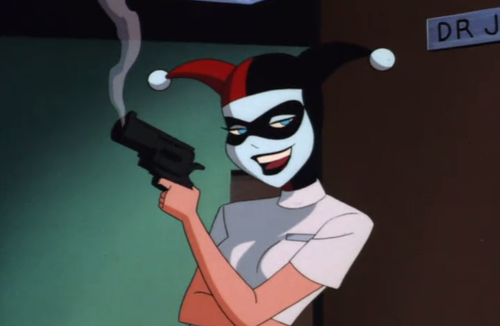
Batman: The Animated Series
I’m just starting to get into this one, and it’s already influencing me. It’s a kid’s show, but the atmosphere is grim and brooding, and the plots are usually pretty dark. But it doesn’t skimp on quirkiness, and every character is a joy to watch.
 
My favorite part of this show is probably Harley Quinn. She might be insane and have terrible taste when it comes to men, but she’s also sweet, funny, and surprisingly warm and loving. And yes, she does try to kill Batman. But you never get the sense that she hates him the way the Joker does—sometimes they even act like friends. And Harley always has fun. More than anything, I think that she’s showing me that even villains can be lovable.

That’s all for now, folks! What are some of your favorite cartoons?

Friday, October 16, 2015

Pen & Paper

you can almost always feel more wonderful when writing if you use a quill pen and ink well:
via
  

    A couple of posts ago I mentioned that I do all of my story writing on my laptop. I typed faster than I wrote; it was easier to change things in Word, which helped me loosen up and get into the flow; it was just more convenient…blah, blah, blah. All that is still mostly true. Typing is faster and definitely more environmentally friendly when you have handwriting like a gigantic chicken’s (4 handwritten pages = about 2 typed pages for me). Instead of ripping out entire pages and starting over, you hit the backspace key. In short: I thought I was done with handwritten first drafts.

   I’m not. Here’s what changed my mind.

   A couple weeks ago I started a new project. It was going to be about girl power and superheroes and steampunk, and I was incredibly excited to start writing it. So, I began typing it into Google Docs…and tanked after just one chapter.

   About a week later I started another project that I was also incredibly excited about (my ideas tend to come in batches). This one was about girl power and zombies. I began typing it into Google docs and—same story—burned out near the middle of the second chapter.

   A week after that I was working on developing another idea I had; one I’d had for ages and really, really wanted to do right. And I began to think of all the false starts I’ve had over the past couple of years, and how they all turned out basically the same—after only a few pages I lost confidence in the idea and just couldn’t think of any way to improve it.

You don’t need to be a genius, you just need to be yourself. That’s the message from Austin Kleon, a young writer and artist who knows that creativity is everywhere, creativity is for everyone. A manifesto for the digital age, Steal Like an Artist is a guide whose positive message, graphic look and illustrations, exercises, and examples will put readers directly in touch with their artistic side.When Mr. Kleon was asked to address college students in upstate New York, he shaped his speech ...:

   Around the same time I was also rereading Steal Like an Artist by Austin Kleon (if you haven’t already read this book, you need to) and I got to chapter four. Chapter four is all about using your hands, and in it Austin Kleon recommends doing your first drafts on paper— “The computer brings out the uptight perfectionist in us”.

   I don’t think that my uptight perfectionist really needs any help being brought out, but after reading that chapter I remembered how much fun I used to have handwriting my first drafts. Sure, they were all crap, but everything I wrote back then was crap and at least I had fun. So I decided that for my newest project, I’d try to go back to using a pen and a legal pad, and see what happened.

   I’m not far in enough yet to tell if it will stick—and if I won’t end up abandoning this one, too—but I am having a TON more fun scribbling on wide-ruled paper than I ever did typing into Google Docs, at least recently. My writing is flowing, not dribbling out in bits and pieces like it usually does on the computer. And at the end of a session, when I sit back and look at the hunk of paper sitting on my desk, I feel like I’ve actually created something.

   I’m not saying that all my first drafts will be handwritten from now on (but who knows?) or that the computer is some kind of demon instrument. It’s just that different writers find different methods that work for them, and I’m still very much in the process of finding one that works for me. Something about seeing my terrible handwriting on paper makes it easier for me to accept the imperfections in the first draft, and once I can do that, actually finishing it doesn’t seem like such a big deal. And that’s a wonderful feeling.

Make a pencil set to give as a gift. Cut paper that is 1" by the length of the pencil. Modgepodge the underside of the paper and wrap. Once it is dry, sharpen.:
via